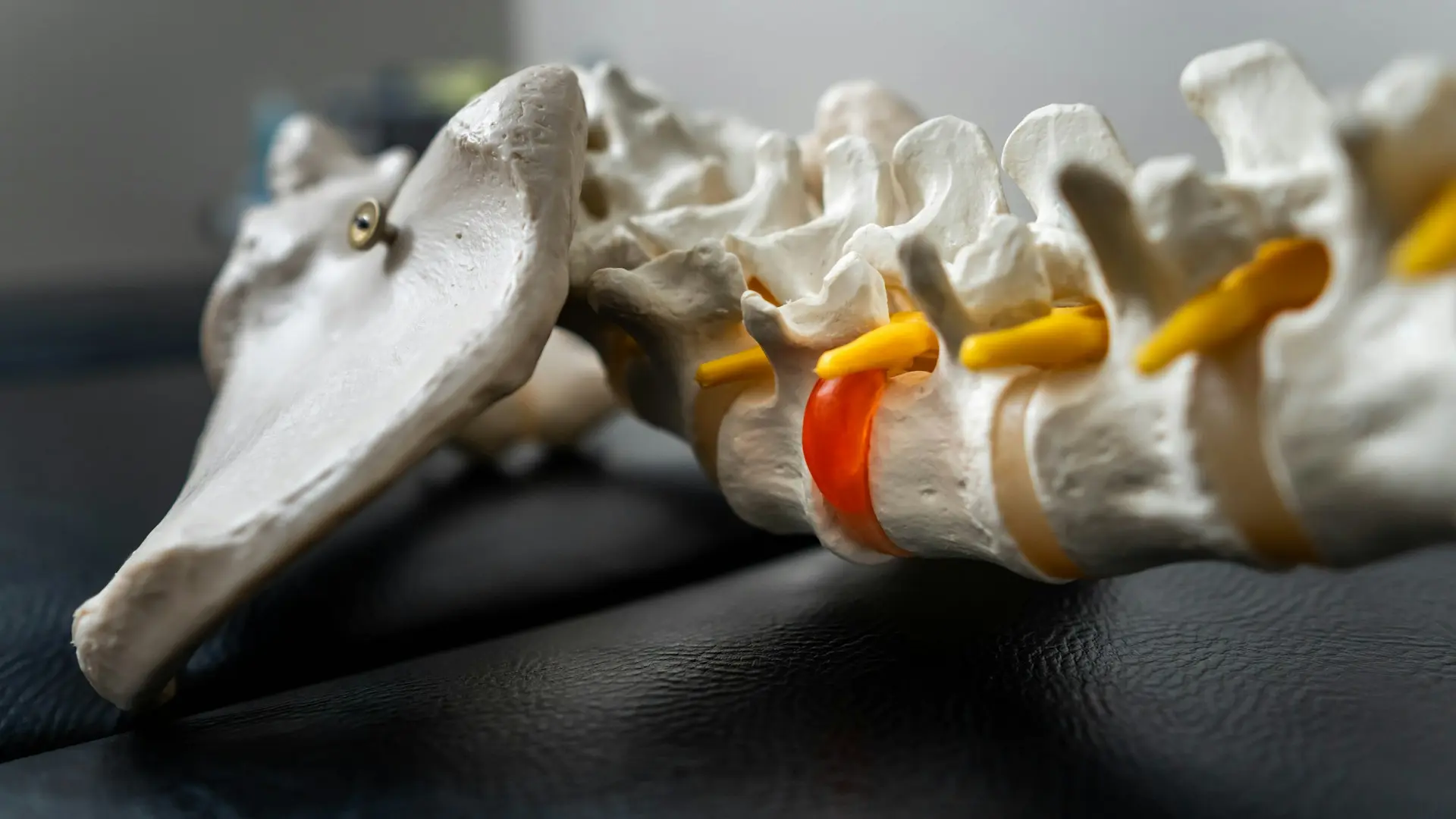

Arthritis of the neck and lower back is quite common affecting 85% of people over the age of 60. While this wear and tear takes its toll as we age, even young people experience pain from arthritis in these areas. Typically, in younger people, we see this arising due to trauma or overuse. When inflammation occurs in these facet joints we can feel pain and stiffness. Since these paired joints lie deep to our muscles, pain from facet arthritis can also manifest as muscle tightness. Normally, these joints work like hinges allowing your spine to bend forward and backward, flex side to side and rotate but when the joints become painful the muscles often go into a reactive spasm to protect the painful area.
Unfortunately, a cure for osteoarthritis of the spine does not exist, but you can get help with facet joint injections and radiofrequency ablation. Both treatments involve treating the painful joints causing your neck or back pain. Facet joint injections are usually cortisone injections designed to reduce inflammation in the affected joints and RFA addresses the painful joint by cauterizing the nerve that supplies sensation to the facet joint. While their goals may be the same, their pain-relieving methods are quite different. One temporarily destroys these small nerves, while one numbs them and reduces swelling in the joint. Let’s discuss their differences, their similarities and the reasons why a patient could choose one over the other.
What Is Radiofrequency Ablation?
Radiofrequency ablation (RFA) stops pain signals from reaching the brain by burning the nerve endings responsible for your pain. RFA uses radiofrequency waves, similar to microwaves, to heat up the targeted nerves and render them unable to conduct pain signals. It is in a fashion like disabling an alarm system- once those nerve endings no longer exist, they can no longer send pain signals to your brain. The arthritis is still there but you can’t feel it. It’s important to note that before RFA can be performed we must perform diagnostic medial branch blocks as a test to make sure that you are a good candidate for the RFA. These medial branch blocks are temporary diagnostic injections, which serve only as a test. These blocks are performed using X-ray guidance and a mixture of Lidocaine and Marcaine- a short and long active anaesthetic. X-ray contrast is used to ensure proper needle placement. Please notify our staff if you have a contrast allergy so that we can call in the necessary prep prior to your scheduled procedure. Insurance companies require these blocks to be performed before they will authorize RFA to be performed. In most cases, the blocks have to be done twice and a pain diary completed after each set of blocks. This completed pain diary ultimately becomes part of your chart and helps to guide treatment.
The main advantage of RFA treatments is that they typically last for a long time. Yes, your nerve endings eventually grow back, but they regenerate quite slowly. Thus, pain relief from RFA lasts for a year on average; however, regeneration time varies from patient to patient. This is why both patients and doctors love RFA — it provides long term pain relief. Please note- If you have a pacemaker or your spine is unstable then RFA is not an option for you.
What is Facet Joint Injections?
Facet joint injections on the other hand contain a combination of powerful anti-inflammatory and numbing medicine or anesthetic. Facet joint injections are performed using x-ray guidance. A small spinal needle is placed inside the facet joint capsule and then x-ray contrast is injected to confirm proper needle placement. Once the ideal flow pattern is seen on the x-ray then the cortisone mixture is injected. This completes this process. Depending on your unique treatment plan and your insurance coverage, you can receive two or three of these injections every year spread out 4-6 months apart. When only short-term relief is achieved with facet joint injections then it is preferable to perform RFA. The exceptions would be if you have a pacemaker or joint instability.
How is Ablation Different from Joint Injections?
While relief to chronic pain is the end goal for both treatments, there are several key differences between them:
- Ablation stops pain signals by burning the nerve endings but doesn’t address the joint inflammation. A facet joint injection actually reduces inflammation but doesn’t obliterate the disturbed nerve.
- Ablation lasts for a year on average. A facet joint injection lasts for a few months but can be repeated and can be performed on both sides on the same visit. RFA is performed only on one side at a time and there are usually 3 weeks between the RFA procedures.
- Ablation can be used in the neck and lower back where there is an affected sensory nerve. A facet joint injection is used exclusively to reduce inflammation in the facet joints along the spine.
- Ablation does not raise your blood sugar levels. Facet joint blocks can temporarily raise your blood sugar.
- Facet joint injections can be performed into arthritic joints in the mid-back (thoracic spine) but RFA is not a treatment option for mid-back pain.
What You Should Know Before Your Procedure:
- Please come to your procedure appointment well hydrated. Drinking more water than usual is best. This applies to all procedures.
- Please arrange to have a driver drive you home after any of these procedures as it is not safe to drive for 4-8 hours depending on which procedure you have.
- If you have a pacemaker, you are NOT a candidate for RFA. Please let us know if you have had a pacemaker placed since your last visit.
What Can You Expect After Your Procedure:
- You will likely experience transient numbness after all facet related procedures. Numbness can last between 4-8 hours. You can also feel somewhat dizzy after the cervical procedures. It is for this reason that we require you to have a driver.
- Post procedure soreness is more common with the RFA and can last from 7 – 30 days.
- If you notice redness or swelling in the injection sites or develop a fever please notify us ASAP.
- Ice packs can come in handy to manage post injection swelling and/or soreness.
- Tylenol, Motrin and other mild pain relievers can be helpful with post procedural pain. If you anticipate needing a refill on one of your medications, please let us know when you come back to have your vitals checked prior to the procedure.
It’s easy to see how each treatment approach has different reasons for when and how it’s used. Plus, each treatment modality doesn’t have to be an “either-or.” Thus, if you’re living with arthritis or experiencing neck or back stiffness and pain, it might be time to speak to one of our Barr Center clinicians to determine the root cause of your pain.
Can the Barr Center Help You with Pain Relief?
Call Barr Center for Innovative Pain & Regenerative Therapies today for a consultation and review of your condition and best treatment options at 757-578-2260 or email us at Info@BarrCenter.com to get started on therapies that relieve your pain.
Learn More
Conditions we treat: Neck Pain, Shoulder Pain, Back Pain, Hip Pain and Knee Pain. We sometimes combine Physical Therapy in our treatments.
Copyright 2020 Barr Center