If you have ever felt a sudden, shooting pain that starts at the base of your skull and seems to travel up the back of your head or behind your eyes, you may be dealing with occipital neuralgia. It is often mistaken for a tension headache or migraine, but it has a different cause and may require a more targeted treatment approach.
What is occipital neuralgia?
Occipital neuralgia is a chronic pain condition involving the occipital nerves. These nerves travel from the upper neck and spinal cord, through the scalp, and into the back of the head. When they become irritated, inflamed, or compressed, they can send sharp and unpredictable pain signals.
This irritation may be related to muscle tension, injury, inflammation, poor posture, cervical spine issues, or nerve entrapment near the upper neck.
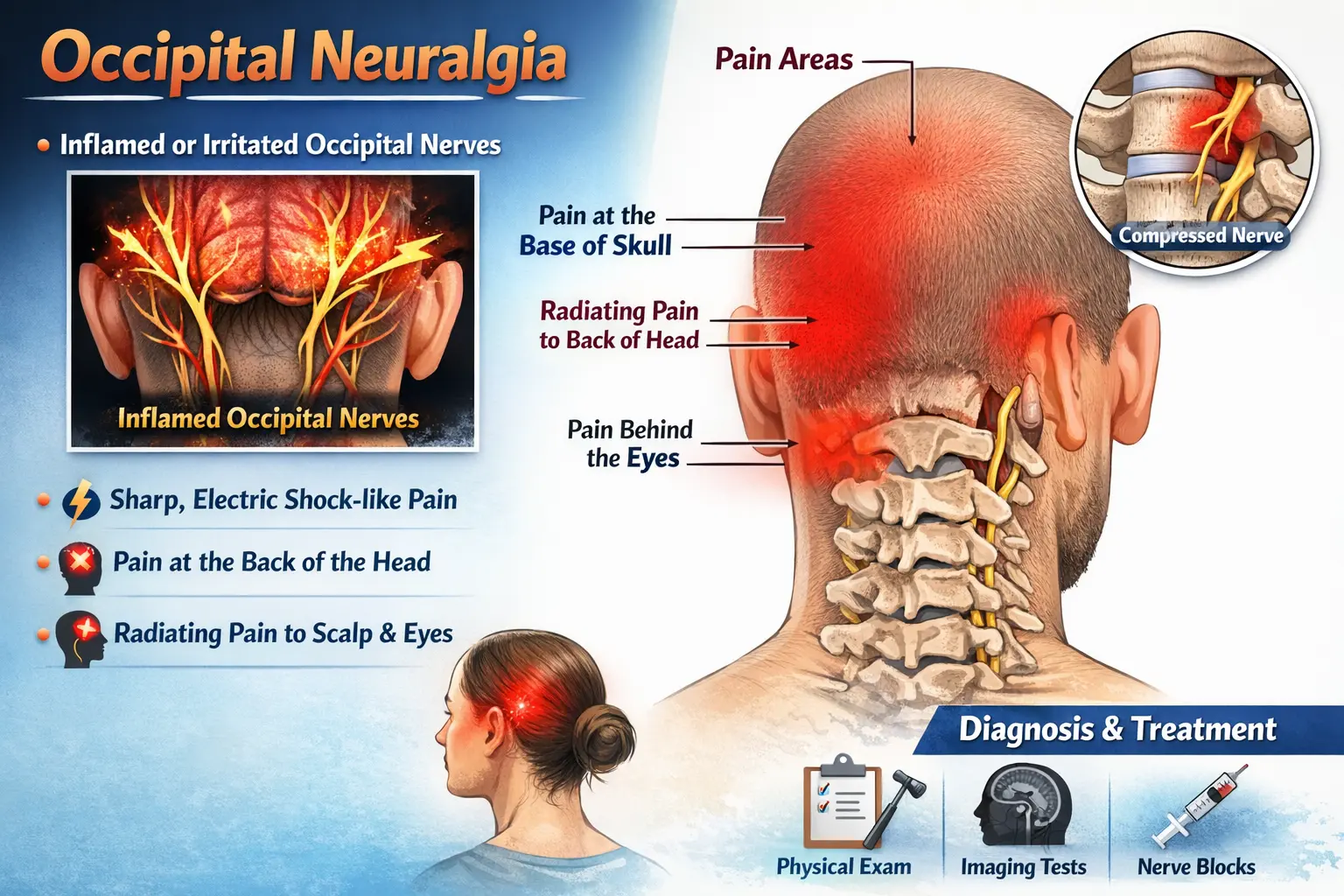
Unlike a typical headache, occipital neuralgia is often described as sharp, stabbing, or electric shock-like pain that comes in sudden bursts rather than a dull, steady ache.
Pain type: Sharp, stabbing, or electric shock-like pain
Radiation: Pain may spread into the scalp, back of the head, or behind the eyes
Location: Usually begins at the base of the skull where the head meets the neck
Some people also notice scalp tenderness, sensitivity to light, or discomfort when brushing their hair or resting their head on a pillow during a flare-up.
How is occipital neuralgia diagnosed?
Because occipital neuralgia can look and feel like other headache conditions, diagnosis usually starts with a careful physical examination and review of symptoms. A provider may check for tenderness over the occipital nerves, limited neck motion, or trigger points that reproduce the pain.
Imaging such as MRI or CT may sometimes be ordered to rule out other structural causes, including cervical disc issues, arthritis, or nerve compression in the upper neck.
How is occipital neuralgia treated?
Treatment depends on the cause and severity of symptoms. Conservative options may include heat, gentle stretching, massage, physical therapy, posture correction, and anti-inflammatory support.
For more persistent cases, occipital nerve blocks may provide relief. These injections use a local anesthetic, and sometimes a steroid, around the irritated nerve to help reduce inflammation and calm pain signals.
In select cases, additional treatments may be considered if symptoms continue despite conservative care. The best approach depends on the underlying reason for the nerve irritation.
The bottom line
Occipital neuralgia can be a frustrating and painful condition, especially when it is mistaken for a more common headache disorder. If you are experiencing recurring sharp or electric-like pain that starts at the base of the skull, it may be worth a more focused evaluation.
With the right diagnosis, targeted treatment may help reduce irritation, calm the nerve, and improve quality of life.