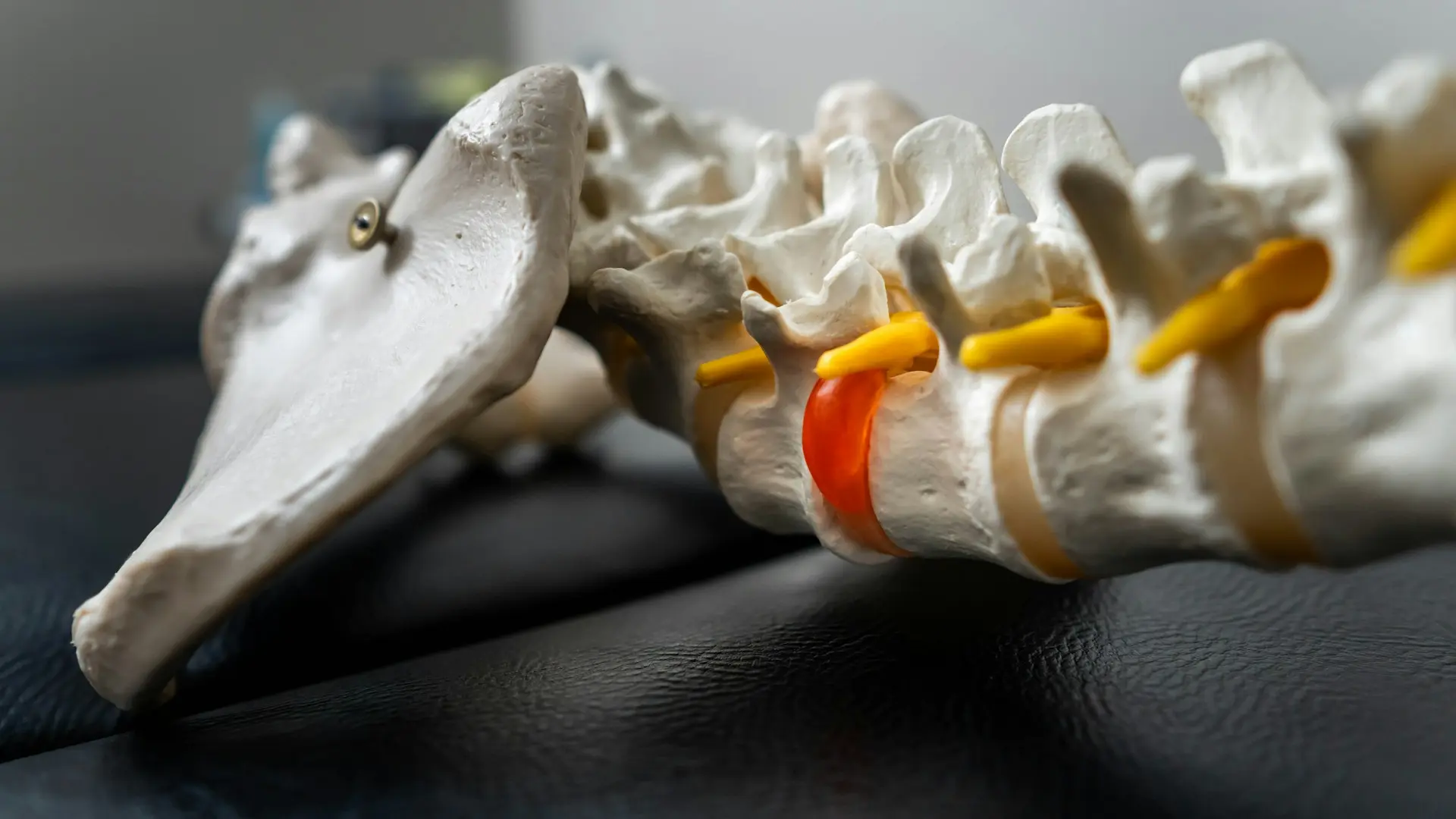

The large, C-shaped sacroiliac (SI) joint connects the pelvic bones (the ilia) to the sacrum at the base of the spine. There are a pair of SI joints, one on either side of the tailbone. Serving as shock absorbers for the pelvis and low back, the SI joints move constantly when the body is in motion, helping to provide stability and structural support to the lower part of the body.
What can go wrong with the Sacroiliac Joint?
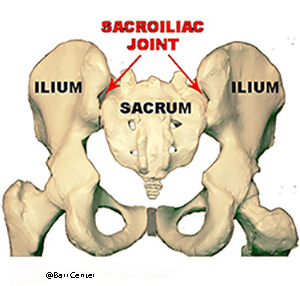 The most common cause of Sacroiliac Joint Dysfunction is from traumatic injury, whether from a fall or traffic accident or from repetitive rotation of the lumbar spine and pelvis during sports and work-related activities. Inflammation of the sacroiliac joints is very common and often occurs for no apparent reason. Mechanical dysfunction of the SI joints is also quite common and we routinely assess for mechanical dysfunction in the office and perform osteopathic manipulation which can be quite helpful. Over stretching, straining, and tearing of the SI joint support ligaments then cause weakening and abnormal motion of the joint, resulting in painful ligaments and joints as well as spasm. Postural imbalances as well as leg length inequalities can also cause Sacroiliac Joint Dysfunction. As a result of this, there can be a
  disruption of movement in the joint (either too much or too little).
Sacroiliac (SI) Joint Injections (Sacroiliitis)
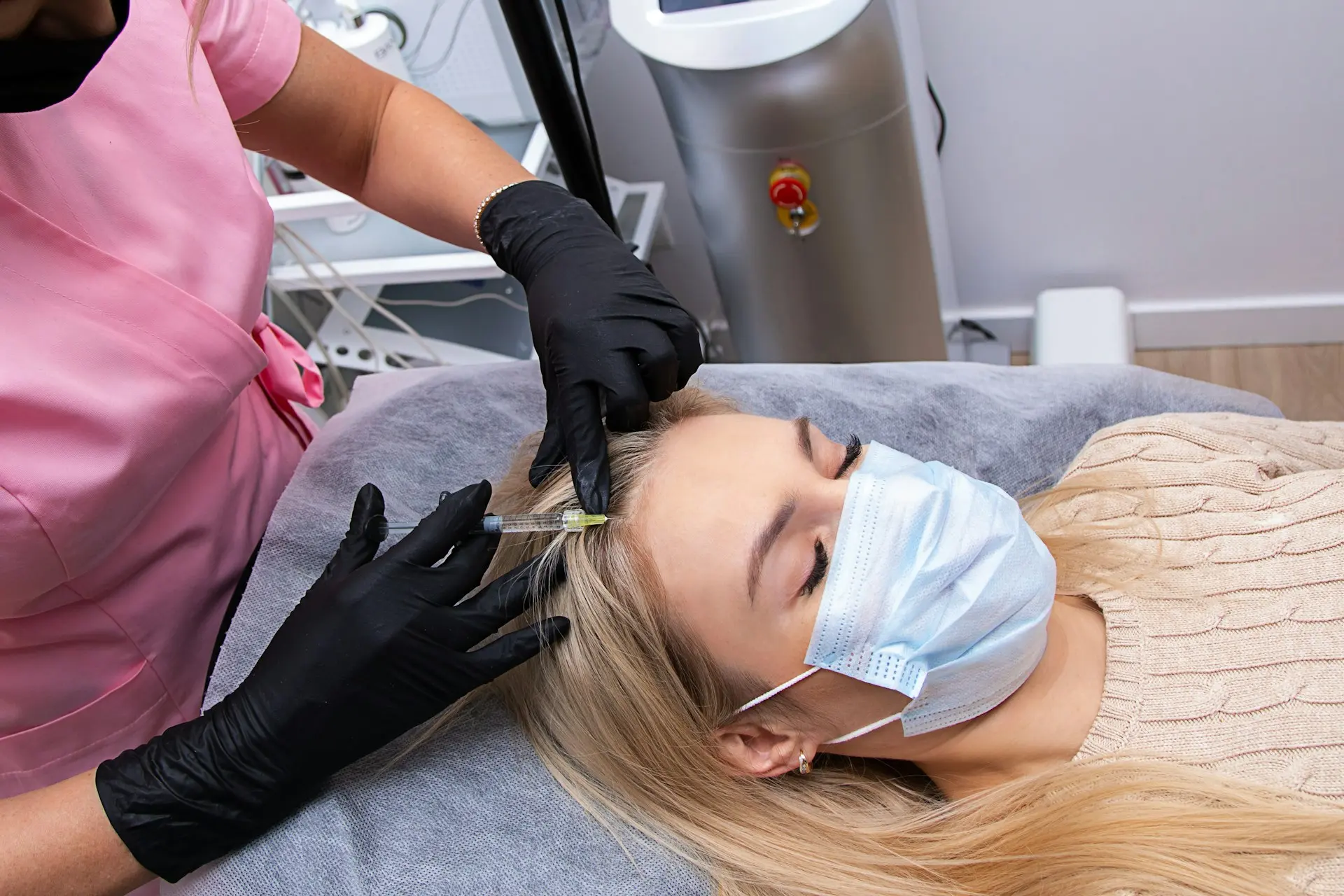
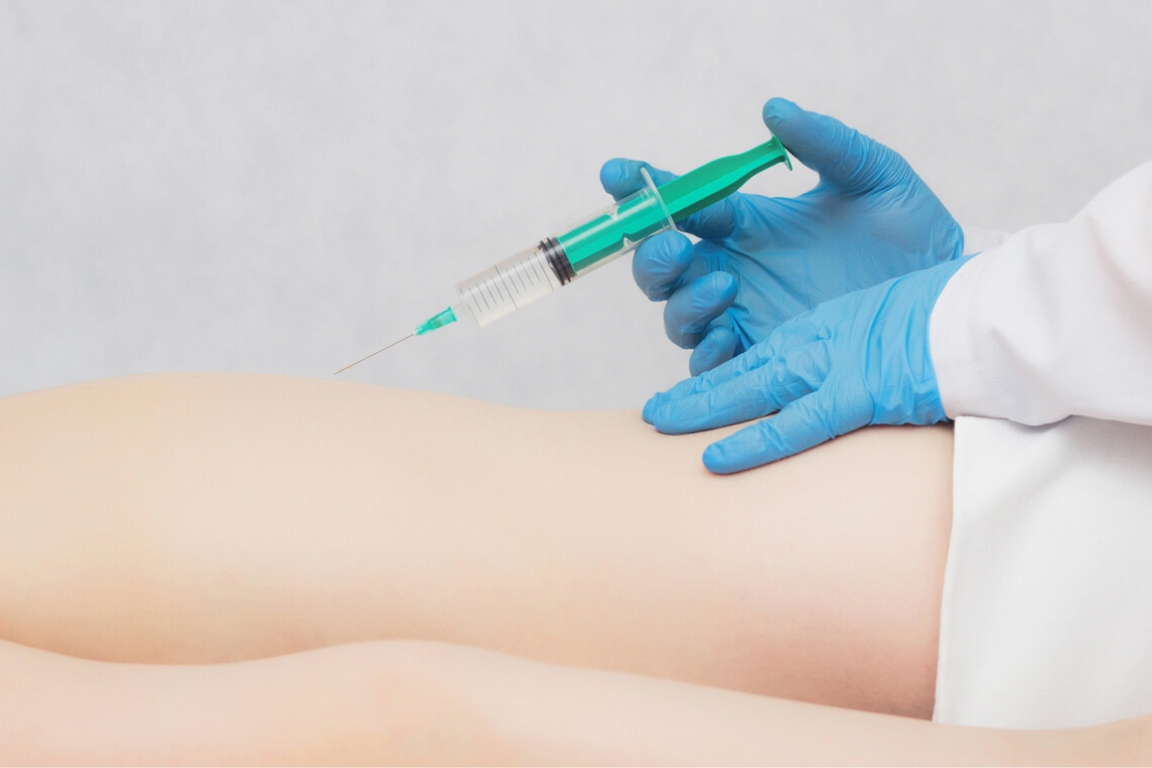
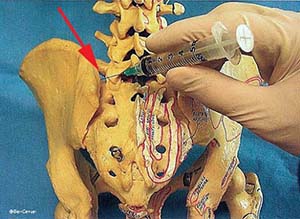
A sacroiliac injection places a pain-numbing medicine and steroid directly into the sacroiliac (SI) joint. There are two sacroiliac joints, one located on either side of the sacrum (see arrow pointing to the left sacroiliac joint). The benefit of this procedure is to reduce inflammation, help confirm the SI joint as the source of pain, and better allow a physical therapist to treat the joint.
How is the procedure done?
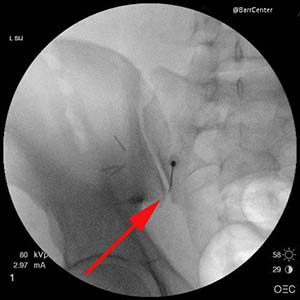 You will receive a local anesthetic before a small spinal needle is inserted under fluoroscopic guidance into the SI joint. The procedure takes approximately 15 minutes. The arrow shows the needle within the sacroiliac joint. Once the needle is securely positioned into the joint a small amount of x-ray contrast dye will be injected confirming proper needle placement, then a mixture of steroid and lidocaine will be injected. The joint will numb up within just a few minutes and you will notice the effects of the steroid within several days.
X-ray image of an actual left sacroiliac joint injection.
What should I do the day of the procedure?
- You may eat a light meal a few hours before the procedure.
- If you are an insulin-dependent diabetic, it’s important not to change your normal eating pattern prior to the procedure.
- If you have an allergy to x-ray contrast dye you will need to notify our staff and you will need to take the Radin prep the evening prior to and the day of the procedure.
Does the procedure hurt?
Because the procedure is done under local anesthesia, you should not experience much discomfort.
What should I expect after the procedure?
The local anesthetic may completely eliminate your pain for a few hours. However, the pain may return and you may have sore buttocks for a day or two. Within three to five days, you should start noticing significant pain relief, which may last up to many months.
What should I do after the procedure?
If you have some soreness, you may apply ice packs hourly for 15-20 minutes at a time for the first 48 hours.
How soon can I return to work?
Twelve hours after the procedure, you can perform normal activities as long as they are not uncomfortable. Barring complications, you should be able to return to work the day after the procedure.
How many injections should I have?
We generally do not perform more than three injections within a one-year period. Giving more injections can increase the likelihood of side effects from the steroid. In addition, if three injections within a year have not helped you much, it is very unlikely that you will get any further benefit from additional injections.
Can I have this procedure if I am on Coumadin® or other blood thinners?
No. You should not have the procedure if you are currently taking blood-thinning medication. Ask your doctor, however, before stopping any medications.
Are there any risks with this procedure?
Some temporary discomfort is normal. However, other risks involved with the injection include infection, bleeding, and worsening of symptoms. Although rare, there are side effects that are related to steroid, including:
- Fluid retention
- Weight gain
- Increased blood sugar (primarily in diabetics)
- Elevated blood pressure
- Mood swings
- Insomnia
Can the Barr Center Help You with Back Pain Relief?
Call us at 757-578-2260 or email us at Info@BarrCenter.com to get started on relieving your back pain.
Learn More
Other pain management conditions we treat are: Neck Pain, Shoulder Pain, Hip Pain and Knee Pain. We often use Regenerative Medicine and Physical Therapy in our treatments.