An Interventional Pain and Sports Medicine Practice

An Interventional Pain & Sports
Medicine Practice

Contrast Bath | Outsmart Your Pain | Barr Center

 What is a Contrast Bath?

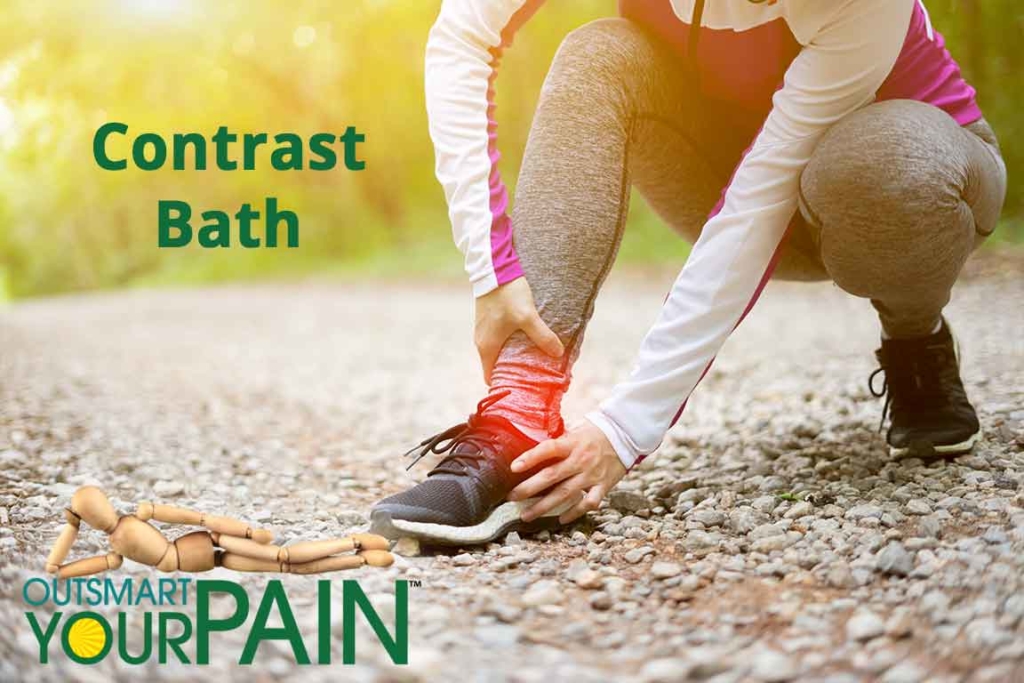
Contrast baths are a form of hydrotherapy. It is also called hot/cold immersion therapy. It is the use of hot and cold water to help decrease pain and increase circulation around an injured area where there may be restricted blood flow. The goals for using contrast baths include:

  • Decreasing pain
  • Decreasing swelling
  • Decreasing/controlling inflammation
  • Improving mobility
  • Improve muscle recovery after exercising

Conditions Commonly Treated?

Contrast baths can be one modality of choice for injuries that cause swelling and pain around the joints and soft tissue in the body such as:

  • Acute injuries to limbs (over 72 hours) including-
    • Upper and lower extremity fractures, plantar fasciitis, Achilles tendinitis, hand and finger arthritis
  • Conditions associated with reduced blood flow
  • Muscle hypertonicity resulting in cramps or spasms
  • Repetitive strain activities, such as carpal tunnel syndrome
  • Chronic Regional Pain Syndrome (CRPS)

Please consult your medical provider or physical therapist if you are unsure if this treatment is right for you.

How Do Contrast Baths Work?

By alternating between hot and cold water the significant temperature difference activates the autonomic nervous system in such a way to increase the blood flow and nutrition to injured tissues. Hot water helps to open up the blood vessels, particularly the capillaries, and cold water constricts them. The alternating between the hot and cold water creates a pumping action, which decreases inflammation and promotes healing.

What Equipment is Needed?

  • Two containers, buckets or sinks large enough to accommodate the body part to be treated
  • Thermometer
  • Towels (for drying and to put under the basins)
  • Cold compress for the head (cold washcloths)
  • Pitcher to remove and add hot water
  • Means for heating water if not near a tub or sink
  • Ice for cold compress and cold bath

What is the Procedure for Contrast Baths?

  • Fill two tubs, large buckets or a double sink that you can fit your injured limb into
    • Fill one with hot water (98 – 110 °F)
    • Fill the other one with cold water (45 – 70 °F)
    • Make sure you use a thermometer to verify the temperatures throughout the entire treatment
      • If swelling is present, keep the temperature below 102 °F and keep your limb in the hot tub for a shorter duration
      • If a joint is swollen and hot ONLY use cold; never heat
    • Soak the affected area
      • Start in the hot water for three to four (3 – 4) minutes
      • Switch immediately to soaking in the cold water for one (1) minute
      • If the cold water is not tolerated for the full minute, place it back in the hot water for three to four (3 – 4) minutes then return it to the cold water for as long as tolerated up to one (1) minute
      • Always start with the hot water and end with the cold water, except:
        • Rheumatoid Arthritis – end in the hot water and dry the area thoroughly
        • The joint is swollen and hot, then only use cold water
  • Repeat the above steps three to four (3 – 4) more times (about 20 minutes)
  • More hot water may need to be added to maintain the right temperature for the “hot bath” (it might decrease from switching back and forth between the hot and cold water)
    • Add this while soaking in the cold bath
    • Make sure to stir while adding the hot water to avoid increasing the temperature too much (do not exceed 110 °F), which can result in a burn
    • The extremity being treated will be desensitized from being in the cold water, making it difficult to discern if the temperature is too hot
  • To increase the effectiveness of the contrast bath, add ice or ice packs to the cold water to help maintain the temperature between 45 – 70 °F

ALTERNATE METHOD if water baths are not available or practical for the area being treated.

  • Use a heating pad or a hot wet towel to the affected area for three to four (3 – 4) minutes
  • Alternate using an ice pack wrapped in a towel a dampened frozen washcloth or towel for one (1) minute
  • Repeat the above steps three (3) more times

Precautions for Doing Contrast Baths

  • Contrast baths should not be done to an acute injury
  • Treatment should not be given until 48 hours have passed since the injury
  • Make sure that the room is warm and free of drafts. Cool room temperatures make contrast baths less effective.

Contraindications for Contrast Baths

DO NOT do contrast baths for any of the following problems:

  • Local malignancies
  • Peripheral Vascular Disease (PVD)
  • Impaired sensation
  • Bleeding and acute inflammation
  • Diabetes and neuropathy
    • If there is a good pulse in the extremities, diabetics and those with neuropathies can benefit from a contrast bath, but it needs to be under the supervision of a physical therapists

Can the Barr Center Help You with Pain Relief?

Call us at 757-578-2260 or email us at Info@BarrCenter.com to get started on  therapies that relieve your pain.

Learn More

Conditions we treat: Neck PainShoulder PainBack PainHip Pain and Knee Pain.  We sometimes combine Physical Therapy in our treatments.
INNOVATIVE PAIN & REGENERATIVE THERAPIES
Expert care for spine, joint, nerve, sports injuries, and chronic pain.

Find Relief From the Conditions Holding You Back

Dr. Lisa Barr is a leading pain management physician in Virginia Beach with over 35 years of experience diagnosing and treating spine, joint, nerve, and musculoskeletal pain. As a Board Certified PM&R specialist, she focuses on whole-body, non-surgical solutions that uncover the true root cause of pain. She is also the international bestselling author of Outsmart Your Pain and one of the region’s most experienced experts in regenerative medicine, PRP, and advanced biologic therapies.

Spinal Conditions
  • Neck Pain
  • Mid Back Pain
  • Low Back Pain
  • Pelvic Pain
  • SacroiIiac Joint Pain
  • Hypermobility
  • Myofascial Pain
    • Trigger Point
      injections
    • What is Sarapin?
  • Fibromyalgia
  • EOS/Hypermobility
    Syndrome
  • Autoimmunity
    • LDN (Low dose
      Natrexone)
    • Testing
  • Prolotherapy
  • Neuroprolotherapy
  • Neural Therapy
  • Cold Laser
  • Entrapment Neuropathy
    • Carpal Tunnel Syndrome
    • Radial & Ulnar Nerve Entrapment
    • Lower Extremity Entrapment
    • Occipital Neuritis
  • Scar Tissue
  • Peripheral Neuropathy
    • Fatty Acid Testing & Specialized Therapies
    • Cold Laser
    • Nutritional Support
  • Neck Pain
  • Mid Back Pain
  • Low Back Pain
  • Pelvic Pain
  • SacroiIiac Joint Pain
  • Hypermobility
  • Inner Arsenal
  • Vagus Nerve Support
  • Power over Pain Mindset
  • Breathing Practices
Resources

Chronic Pain Management Articles

Barr Center Video Playlist

8 Videos
OVERVIEW

The Barr Center for Innovative Pain and Regenerative Therapies, led by Dr. Lisa Barr, is dedicated to helping people in pain. With over forty years of experience, Dr. Barr and her staff offer a range of evaluation and treatment options, including osteopathic assessment, trigger point injections, prolotherapy, and regenerative therapies. They prioritize a caring atmosphere and involve patients in their own care, ensuring they understand the recommended treatments. If necessary, they collaborate with other professionals to provide a comprehensive approach. Dr. Barr’s expertise has been recognized with the Top Doc award for thirty years.

FAQ

Pain Management and Treatment

The Barr Center for Innovative Pain & Regenerative Therapies is located at:

933 First Colonial Road, Suite 200
Virginia Beach, VA 23454

Phone: 757-578-2260
Email: info@BarrCenter.com

Monday–Thursday: 8:30 am–5:00 pm

Friday: Closed (note: physician on call)

Not always. Some insurance plans—especially HMOs—require a referral before seeing a specialist. To confirm what your specific plan requires, call your insurance provider or contact our office at 757-578-2260.

We accept most major insurance plans (except Medicaid). If your plan requires a referral or pre-authorization to see a specialist, you will need one for your first visit. After your initial consultation, our office obtains any future pre-authorizations, sometimes with assistance from your referring provider. Visit our Patient Resources page for details.

Yes. We offer telemedicine visits for certain appointment types, including follow-up visits and treatment discussions. Some procedures require in-office evaluation, and our team will help determine whether a virtual visit is appropriate.

Conditions and Treatment Questions

Led by pain management specialist Lisa Barr, M.D., the Barr Center provides comprehensive musculoskeletal and pain treatments including:

• Acupuncture
• Mind-body medicine and lifestyle optimization
• Interventional spinal procedures
• Sports medicine
• Physical therapy
• Regenerative medicine (PRP, prolotherapy)

We treat a wide range of pain and musculoskeletal conditions, including:

• Neck, shoulder, hip, back, and knee pain
• Sports injuries and repetitive strain conditions
• Posture, sleep, and movement-related pain
• Car accident injuries, including whiplash

Our approach provides proven alternatives to surgery and long-term medications through targeted injections, hands-on physical therapy, acupuncture, lifestyle guidance, and regenerative medicine.

If your pain is persistent, recurring, or limiting daily activities, it is time for an evaluation. We assess how your joints move, how your muscles function, and whether lifestyle factors are contributing to your symptoms.

We offer a comprehensive, root-cause approach to pain in a boutique practice setting.

Our team is highly specialized, and we combine interventional pain medicine, regenerative therapies, physical therapy, and whole-person care—all under one roof.

Our team includes board-certified physicians, licensed physical therapists, regenerative medicine specialists, acupuncture providers, and experienced clinical support staff with focused expertise in musculoskeletal medicine and pain management.

Preparing for your First Appointment

To help make your first visit efficient, please bring:

• Photo ID
• Insurance card
• Referral (if required by your insurance)
• Completed new-patient paperwork
• Co-pay, if applicable

If you have MRIs, CT scans, X-rays, or lab results, please have your referring provider fax them to our office. You may also download our Medical Records Request Form to expedite the process.

Experiencing Pain? Reach Out For Medication-Free Treatment